Eu me sentia confiante com a minha aparência e como me vestia. Então, mudei-me para o Japão.
Uma mulher que se mudou da Nova Zelândia para o Japão relata como a visibilidade de ser estrangeira e as normas locais de beleza e vestuário alteraram profundamente sua autoconfiança e autoimagem.
Pontos principais
- A autora mudou-se da Nova Zelândia para o Japão há três anos.
- O tamanho de roupa da autora nos EUA é 16 a 18, o que equivale a 3L ou 4L no Japão.
- Tatuagens no Japão frequentemente carregam associações com o crime organizado.
- A cultura de beleza e os padrões de vestimenta no Japão levaram a autora a mudar sua autoimagem e estilo.
Mudar para um novo país traz inúmeros ajustes, desde o idioma até as regras sociais, mas eu não esperava me sentir deslocada no meu próprio corpo.
Antes de me mudar para o Japão vinda da Nova Zelândia, eu estava geralmente contente com a minha aparência, tendo já superado os obstáculos de imagem corporal do início da maternidade. Apesar de ser uma mulher plus-size, eu me considerava confiante e raramente me importava com o que os outros pensavam da minha aparência.
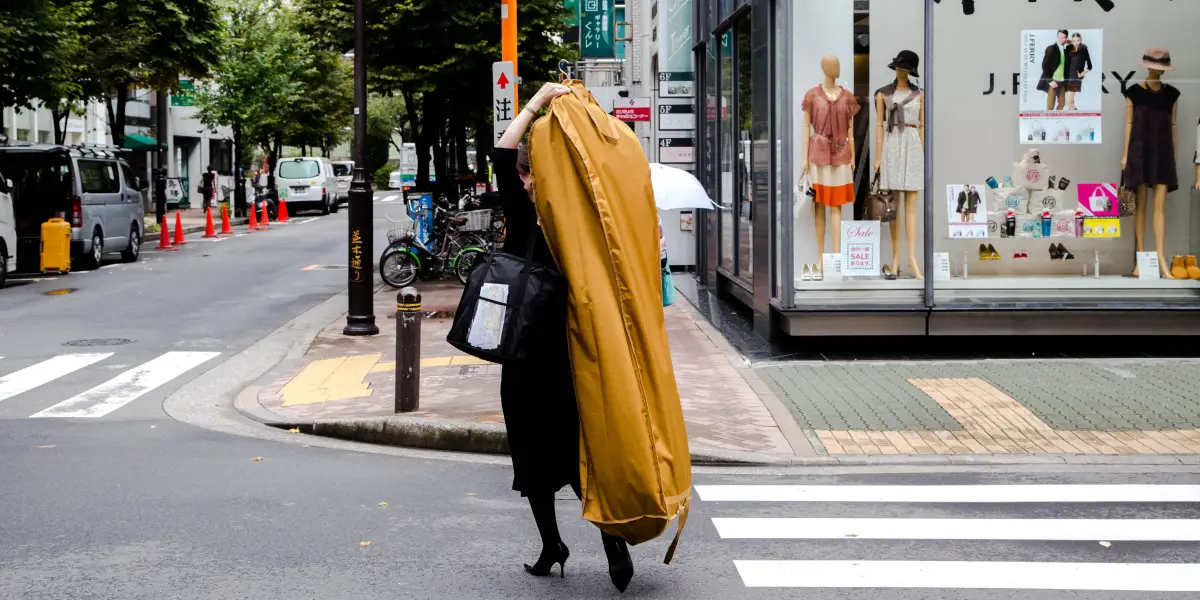
Após três anos aqui, a visibilidade que acompanha o fato de ser estrangeira trouxe um nível de autoconsciência com o qual nunca havia lidado antes. Eu não conseguia parar de me comparar a todos ao meu redor.
Ser visivelmente não japonesa significava que eu frequentemente me sentia mais visível do que nunca, e isso me tornava hiperconsciente de como eu parecia. Muitas vezes sentia que as pessoas estavam olhando para mim, o que me fazia questionar o que elas estavam notando e, em pouco tempo, vi-me examinando partes de mim mesma em que nunca havia pensado antes.
The hair on my arms used to feel as normal as having eyebrows, but after noticing how uncommon visible body hair seemed to be among locals, I became convinced I must look like a yeti in comparison, and soon found myself reaching for a razor.
Still, I always thought a bit of body hair never hurt anyone until an older woman, who had been openly staring at my legs, scoffed as she walked past and shook her head. Afterward, I found myself questioning whether it was my slightly unshaven legs or the large tattoo on my calf that had prompted such a reaction.
Tattoos in Japan can feel taboo, as they carry a long-standing association with the country's organized crime groups. Many bathhouses, swimming pools, gyms, and other public facilities still restrict access for people with tattoos.
Whatever the reason, I spent the rest of the day acutely aware of my body and still think about that moment whenever I put on a pair of shorts.
Shopping for clothes here hasn't exactly helped me build confidence either. Back home, I typically wear a US size 16 to 18. In Japan, that generally puts me at around a 3L or 4L, sizes I've mostly only found at select stores or through online retailers.
Much of the mainstream clothing here seems to cater to the smaller, more petite proportions common in the Japanese market, leaving fewer options for bodies like mine.
The experience of repeatedly trying on clothes that don't fit the way I expect can turn into self-loathing. Instead of thinking that the clothes simply aren't designed with my proportions in mind, I find myself questioning my body.
In time, I started changing my style to fit in. Growing up in rural New Zealand never demanded much in the way of fashion or beauty. It felt perfectly acceptable to pop into the supermarket wearing sweatpants and gumboots (rubber rain boots), or even go barefoot.
For most of my life, my style barely changed. My hair has cycled through every color imaginable, and about 90% of my wardrobe has come from the same label: Drop Dead Clothing, an alternative, grungy brand.
I rarely wore makeup, and my skincare routine consisted of little more than face wash, moisturizer, and sunscreen in summer.
Looking back at old photos, it's obvious I never put much energy into fitting conventional beauty standards. Beauty culture often felt like another set of expectations largely placed on women, and I viewed much of it with a healthy dose of skepticism.
Moving to Japan quickly challenged that perspective. I became much more aware of the country's beauty culture, from the sheer number of skincare and makeup products available in stores to the constant stream of J-beauty hauls and "must-try" products appearing on my Instagram feed.
I also noticed how put-together people often looked in everyday settings. While sweatpants and a slightly disheveled look had always been perfectly acceptable for a quick supermarket run back home, I rarely saw adults dressed that casually here.
Surrounded by those trends and expectations, I found myself questioning choices I had worn confidently for years. Although I still dye my hair and hold on to parts of the aesthetic I've had since my teens, I haven't owned a pair of gumboots since moving here.
I also catch myself second-guessing my outfit before a basic run to the convenience store. I know that, as a foreigner living in Japan, I will never completely "fit in," but I actively try to avoid the attention that comes with looking out of place.
Bit by bit, comfort has lost ground to conformity. I wear makeup more frequently and have built a collection of viral Japanese beauty products that my younger self would have scoffed at.
Living in Japan changed how I see myself — and pushed me to explore my identity. I don't like that I've become more self-conscious, but I've also realized that how we present ourselves isn't always about meeting external expectations.
It can also be shaped by habit and exposure to different norms. Some of the changes I have made to my appearance have come from insecurity — others from curiosity — and I still haven't fully untangled where one ends and the other begins.
At the same time, I'm grateful for how living in Japan has pushed me to experiment with forms of self-expression I would have dismissed outright a few years ago.
I've enjoyed exploring makeup and a more feminine side of my style, from accessorizing with cute hair clips and handbags to building a surprisingly nice shoe collection now that my beloved gumboots are no longer an option.
It has forced me to question how much of my self-image is truly mine, and how much has been shaped by the places and expectations around me. As uncomfortable as that process has sometimes been, it has also shown me that personal growth and insecurity are not always separate things. Sometimes they arrive together.